A safe answer to how to change garage door roller parts depends on their location and nearby springs. An upper roller may suit careful DIY work when the door is stable. Bottom rollers, cables, springs, hinges, and off-track doors can cause serious injury. Radford Garage Door Repair can inspect the full system before parts are replaced.
Table of Contents
- How do you know when a garage door roller needs changing?
- What causes garage door rollers to wear out?
- Can you change a garage door roller yourself?
- How do you change a garage door roller safely?
- What is the difference between nylon and steel garage door rollers?
- What should you check when a garage door roller comes off the track?
- When should you call a garage door repair professional?
How do you know when a garage door roller needs changing?
A garage door roller may need changing when the door rattles, grinds, sticks, or moves unevenly. You may see cracks, flat spots, loose bearings, or a bent stem. The door may still work, but use can put more strain on the tracks, hinges, opener, and cables.
Sounds and movement that point to worn rollers
A good roller moves through the track with little sound. A worn roller may squeak, rattle, grind, or pop as the door moves. One bad roller may make noise at one point. Several worn rollers can make the whole door sound rough.
Watch the door as it opens and closes. It should move in a steady line. A door that jerks, leans, pauses, or shakes may have roller trouble. The track may also be dirty, bent, loose, or out of line. A roller is not always the only cause.
Look at each visible roller without touching springs or cables. A nylon wheel may split or wear at its edge. A steel wheel may show rust or rough bearings. A wheel that does not turn well may need service. A stem at an odd angle can point to a damaged hinge or track.
How roller problems affect the door system
Rollers guide each door section as it moves. When one roller drags, other parts must carry more force. This may affect the hinges, track fasteners, lift cables, and opener.
A noisy door is not always an emergency. A crooked, partly open, or off-track door needs more care. Stop using it until the cause is clear. Radford Garage Door Repair can help Radford property owners tell if the issue is a roller, hinge, track, or another part.
What causes garage door rollers to wear out?
Garage door rollers wear from repeated use, dirt, moisture, poor alignment, and nearby damage. Finding the cause matters. Replacing one roller will not fix a bent track or broken hinge. A full check can help prevent the same issue from returning.
Age, dirt, moisture, and poor alignment
Each opening cycle moves the rollers along the track. Over time, wheels and bearings can wear. Dirt can collect in the track and add drag. Water can rust steel parts and harm some bearing surfaces.
The track does not need heavy grease. Grease can hold dust and make a rough paste. A homeowner can wipe away loose dirt from the track area. Keep your hands away from moving parts and tensioned hardware.
Poor alignment is another common cause. A loose bracket, bent track, or shifted fastener can make a roller rub. A door may also move badly after an impact from a vehicle, tool, or stored item. These problems need more than a new wheel.
How hinges, tracks, and door weight contribute
Hinges join the door sections and let them bend during travel. A cracked hinge can hold a roller at the wrong angle. This can cause uneven wear and make the door bind.
Door weight also matters. Insulated, solid, and business doors may use different roller sizes and hardware. The replacement must match the wheel size, stem length, hinge opening, and track setup. A similar-looking part may not fit or carry the load safely.
Garage Door Maintenance can help find loose hardware, dirty tracks, damaged hinges, and poor movement early. A homeowner should not tighten hardware near springs or lift cables without training. These parts can hold dangerous force.
Can you change a garage door roller yourself?
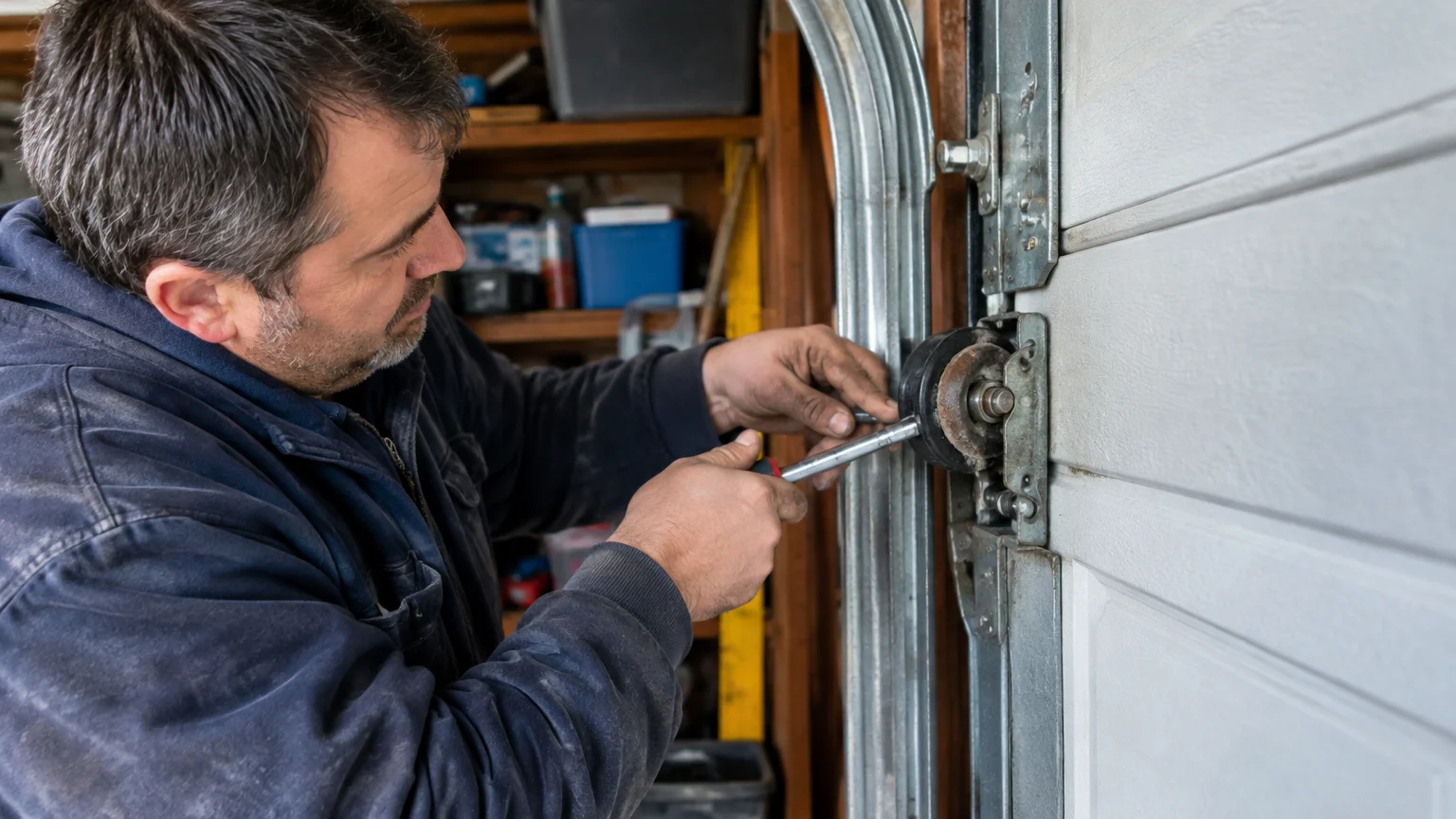
A careful homeowner may replace an accessible upper roller when the door is stable. The work must stay away from springs, cables, bottom brackets, and damaged tracks. The roller’s location matters more than how simple the part looks.
Which roller replacements may be suitable for careful DIY work
An upper roller may be easier to reach when the door is fully closed and stable. First, make sure the replacement matches the old part. The wheel, stem, bearing style, and hinge opening must fit the door.
Safe homeowner checks include watching the door move, clearing items from the track, and wiping away loose dirt. You can also read the door and opener manuals. These checks help you learn about the problem without reaching near parts under tension.
You do not need a professional for simple cleaning, visual checks, or basic upkeep away from springs and cables. Stop if the door is heavy, crooked, loose, stuck, or hard to control. Do not ask another person to hold a door as a substitute for proper support.
Why removing rollers from the bottom section can be dangerous
Bottom rollers connect near the bottom brackets. These brackets may sit close to lift cables and spring force. A lift cable under tension can move sharply if a bracket shifts. This can badly injure hands, arms, or the face.
A garage door spring is a tight or stretched metal part that helps lift the door. Torsion and extension springs store energy. Spring work needs the right tools, training, and repair plan. It is not a normal household task.
The same warning applies to a garage door hinge broken near the bottom section. The hinge may carry more load than it seems to carry. A trained worker can secure the door and replace the part without guessing.
How do you change a garage door roller safely?
The safe way to change garage door roller parts starts with finding the roller location. The door must also be stable. Safe work does not include releasing springs, removing bottom brackets, loosening lift cables, or forcing an off-track door.
Tools, preparation, and door-position checks
Before upper-roller work, read the door maker’s instructions. Compare the replacement part with the old one. Basic hand tools may help, but the right tool depends on the hinge and fastener design. Eye protection and work gloves can help protect against dirt and sharp edges.
Clear the work area first. Keep people, pets, and vehicles away from the door. Disconnect the opener as the manual directs when needed. The door must remain in a stable position. A door that will not stay stable is not ready for DIY work.
Do not work near a spring, cable, bottom bracket, or loose track. Do not bend the track to force a roller into place. Do not remove fasteners that may support the door’s weight. These are garage door safety basics.
General replacement steps for accessible rollers
For an accessible roller that is confirmed safe, the general process is simple in concept:
- Identify the matching part. Compare the wheel, stem, bearing, and hinge opening.
- Secure the work area. Keep the door stable and people away from it.
- Remove only the approved fastener. Avoid hardware near springs, cables, and brackets.
- Guide out the old roller. Never force it past a bent track or damaged hinge.
- Fit the new roller. Make sure it sits correctly in the track and hinge.
- Test movement carefully. Stop if the door binds, leans, scrapes, or sounds different.
These steps are general guidance, not a spring or cable repair method. A failed test means the door needs a trained inspection. Garage Door Off Track Repair is the safer option when the roller will not sit correctly or the track has moved.
What is the difference between nylon and steel garage door rollers?
Nylon rollers are often quieter and do not rust like steel wheels. Steel rollers can suit demanding use, but they may make more sound and need checks for rust and bearing wear. The best choice depends on the door, track, use, and correct fit.
Noise, durability, and maintenance requirements
Nylon rollers are common in homes because they can make travel quieter. Some have sealed bearings, which may reduce routine care. They can still crack, wear, or lose shape when the door is heavy or the hardware is damaged.
Steel rollers are strong and common on doors that see frequent use. They may last well when the track is straight and the bearings work well. Rust, dry bearings, and rough edges can increase noise and drag.
Neither material fixes a bad track or broken hinge. A new roller can wear quickly when the door is out of line. The wheel must match the full door system, not just the owner’s material choice.
How to choose rollers for a home or business
A home garage may need quiet movement. A business or rental property with frequent use may need a stronger roller and regular care. Door weight, use, weather, and track condition all matter.
A technician can check the full roller set instead of replacing only the loudest wheel. Matching rollers may help the door move more evenly. If the opener struggles, the issue may also involve balance, hinges, springs, or track resistance.
Garage Door Opener Repair may be needed when the opener clicks, stops, reverses, or cannot lift a door that moves well by hand. Opener and roller trouble can happen together, so both systems should be checked.
A garage door seal is another part worth checking during routine care. It sits along the bottom or sides of the door and helps limit drafts, dirt, and water. A worn seal will not cause roller failure, but it can add to other door problems.
What should you check when a garage door roller comes off the track?
When a garage door roller comes off the track, stop using the door and keep people clear. The cause may be a bent track, loose hinge, broken roller stem, damaged cable, or impact. Forcing the door can worsen the damage and may make it fall.
Common reasons a roller leaves the track
A roller may leave the track after an impact or when a track bracket becomes loose. A worn hinge can change the roller angle. A broken cable can let one side drop. A damaged roller may also break or slip from its hinge.
Look from a safe distance. Note whether the door leans, a cable hangs loose, or the track has a sharp bend. Do not push the door up or pull it down. Do not place fingers between door sections.
The track should guide the rollers without pinching them. Do not bend it by hand. A loose track may also be under load, so avoid removing its bolts without proper support.
When an off-track door needs professional repair
An off-track door needs help when it is heavy, crooked, stuck, partly open, or connected to a loose cable. The same applies when a spring, bottom bracket, hinge, or track support looks damaged. These parts can shift as soon as the door moves.
Garage Door Cable Repair may be needed when a cable has slipped or broken. Garage Door Off Track Repair may be needed when the rollers and track no longer line up. A trained technician can secure the door before correcting the cause.
Radford Garage Door Repair can assess a door that will not close or open. It can also help when a vehicle is trapped inside. Until the door is checked, keep the area clear and do not test the opener. A powered opener can pull against a damaged door.
When should you call a garage door repair professional?
Call a professional when a roller problem involves springs, cables, bottom brackets, heavy door sections, bent tracks, or an off-track door. Prompt help can restore safe access and protect a home or business from an unsecured opening.
Warning signs that make DIY replacement unsafe
The following signs mean the door should not be repaired by trial and error:
- A lift cable is loose, broken, or wrapped unevenly.
- A spring is broken, stretched, separated, or visibly damaged.
- The bottom bracket or lower hinge is cracked or loose.
- The door is crooked, stuck, or partly off the track.
- A track is bent, pulled from its support, or badly rusted.
- The opener strains, reverses, or runs while the door cannot move.
A professional can also help when the correct roller is hard to identify. A matching set may work better than one different wheel. The repair plan depends on the door design and damage found during the inspection.
How prompt roller and track repair protects access and security
A working garage door helps protect vehicles, tools, stored goods, and entry points. A door that stays open or cannot lock may leave a property exposed. Delaying repair can also turn a small roller issue into track, hinge, cable, or opener damage.
For property owners, quick action can reduce trouble for tenants and workers. For homeowners, it can restore normal entry without unsafe lifting or forcing. Radford Garage Door Repair serves customers in the main area, including East Radford and New Town, as well as Christiansburg, Dublin, Pulaski, Pembroke, and nearby communities.
Key takeaways
- Worn rollers can cause noise, cracks, rough movement, and uneven travel.
- Nylon is often quieter, while steel may suit demanding use.
- Bottom rollers, springs, cables, and brackets are not safe DIY work.
- An off-track door should stay still until its cause is checked.
- A full inspection can help protect the track, opener, hinges, and door.
Frequently Asked Questions
Can a homeowner change a garage door roller?
A homeowner may replace an accessible upper roller when the door is stable. The work must stay away from springs, cables, and bottom brackets. Bottom rollers and damaged hinges need trained care. If the door is crooked, heavy, stuck, or off track, stop using it.
How often should garage door rollers be replaced?
There is no single schedule for every door. Rollers wear at different rates based on use, dirt, moisture, door weight, and track alignment. Check them when the door becomes noisy, jerky, or uneven. A technician can decide whether one roller or several need changing.
Are nylon garage door rollers better than steel?
Nylon rollers are often quieter and may suit many homes. Steel rollers can work well on doors with frequent use or higher demands. Neither choice is right for every system. The wheel must match the door, hinge, track, load, and bearing design.
What should someone do when a garage door roller comes off?
Stop using the door and keep people away from it. Do not push, pull, bend the track, or run the opener. A loose cable, damaged hinge, bent track, or heavy door can create a serious hazard. Professional Garage Door Off Track Repair can address the cause safely.
Does a noisy roller always need replacement?
No. Noise can come from dirt, a bent track, a loose hinge, dry bearings, or another damaged part. A roller may need changing when it has cracks, flat spots, rust, rough bearings, or poor movement. Check the full door system before choosing a part.
Conclusion
Learning how to change garage door roller parts can help homeowners spot warning signs. It does not make every repair safe. Accessible upper rollers may suit careful work, while rollers near springs, cables, bottom brackets, or off-track sections need trained attention. Contact us today to arrange urgent help from Radford Garage Door Repair.