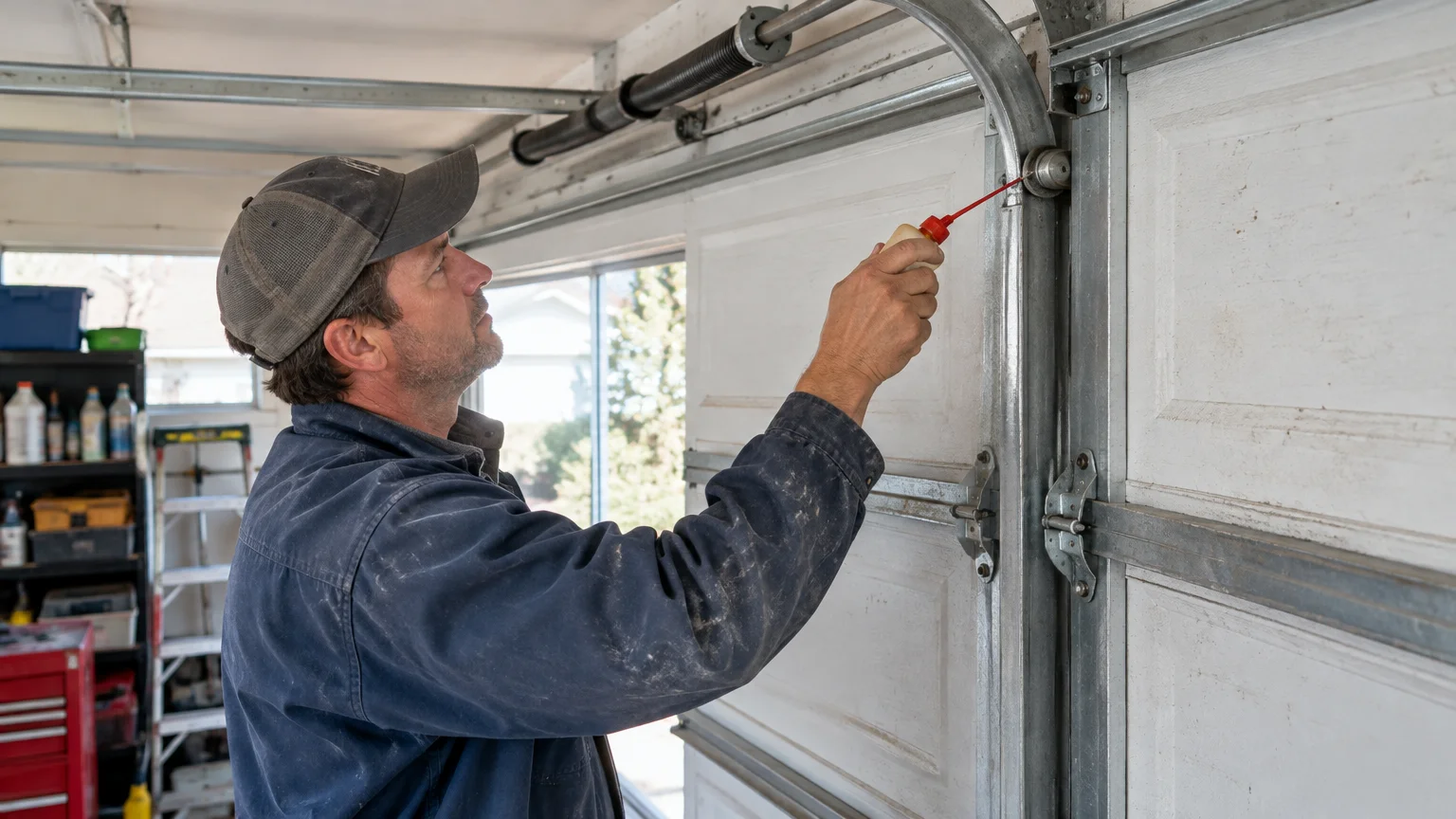
To learn how to oil garage doors, use a product made for garage doors and apply a little to the moving parts its label allows. Keep lubricant off the tracks, cables, and floor. First, make sure the door cannot move while you work. Stop if you see damage or the door moves unevenly.
Why does a garage door need lubrication?
Lubrication helps moving parts slide or turn with less rubbing. It may quiet small squeaks and help limit wear over time. But it cannot fix a broken part or a door that is out of balance. In Radford, regular checks can help homeowners spot changes before the door stops working.
Which parts of the door should move quietly?
A garage door has hinges between its panels and rollers that move in the tracks. Springs help lift the door, and the opener moves it through a drive system. These parts should move without harsh scraping, banging, or repeated squealing. A little sound may remain, but a new or worsening noise needs attention.
The lubricant label can tell you whether it suits hinge points, metal rollers, or some springs. Some rollers have sealed parts and should not be oiled. Tracks guide the rollers; they usually should not have oil on them. A slippery track can hold dirt or affect how the rollers move.
What can cause a garage door to squeak or grind?
Dry hinges or rollers may squeak as the door moves. Dirt in the tracks, loose parts, worn rollers, or poor alignment can also cause noise. Grinding, scraping, or a loud bang may point to damage that needs repair, not more lubricant.
Listen while the door moves, but stay clear of it and its moving parts. If the sound comes from the opener, the problem may be inside its drive system. Garage Door Opener Repair may help when the opener strains, stops, or makes a harsh new sound. Oil can support upkeep, but it will not fix every noise.
What should you do before oiling a garage door?
Get the door and work area ready before using any product. Keep people, pets, and objects away from the door’s path. Read the lubricant label and the door or opener manual, since care advice can differ. A homeowner can do simple cleaning and lubrication, but should not repair springs or cables under tension.
How can you prepare the door and work area safely?
Close the door and make sure it cannot start moving while you work. Follow the owner’s manual when turning off the opener. Keep fingers clear of hinges, rollers, cables, and the spaces between door sections. Use a stable way to reach only parts you can access safely. Do not lean over the door or climb on it.
Use a clean cloth to wipe dust from parts that need attention. Do not put your hands in the tracks, loosen hardware, or try to move a spring. Look for bent tracks, loose parts, frayed cables, or rollers sitting out of place. If anything looks damaged, stop and arrange a repair.
Which lubricant is suitable for garage door parts?
Choose a product made for garage doors or named in the maker’s manual. Check the label to see which parts it suits. Some products work on metal parts, while others may not suit plastic or sealed rollers. Do not choose a product just because it is called oil; the wrong one may attract dirt or harm a part.
Do not use grease or a household spray on every part without checking its label. Keep lubricant off the tracks, door panels, and floor. Radford Garage Door Repair can help homeowners decide whether a noisy door needs basic care or a repair. A tune-up may check how the door moves and whether parts show wear.
How do you oil a garage door correctly?
For safe upkeep, use a small amount of suitable lubricant on moving parts named on the product label. Keep it away from tracks, cables, and the floor. After applying it as directed, open and close the door while watching from a safe place. Stop if the door catches, jerks, or makes a harsh sound.
Where should you apply lubricant on the door?
Use the product only on parts its label allows, such as hinge points or metal roller bearings. If the manual says a spring may be lubricated, follow its advice without touching or adjusting the spring. Do not spray blindly into the opener or onto parts that are hard to reach.
Aim the spray at the part, not the area around it. Use a cloth to catch drips and wipe away extra lubricant. Do not remove covers or guards to reach a part. If you cannot reach it safely, leave the task to a trained technician.
How can you avoid over-lubricating or damaging components?
More lubricant does not mean better care. Too much can drip onto the floor, collect grit, or spread to surfaces that should stay clean. Use only the amount the product directions call for, and wipe away what you can see. Never apply lubricant while the door is moving.
If you turned off the opener, restore power by following the manual. Stand clear and test the door through a normal cycle. Do not hold or guide it as it moves. If the door shakes, catches, reverses without a clear reason, or sounds worse, stop using it and seek help.
When should you stop and call a garage door repair professional?
Stop and contact a repair professional if the door looks damaged, moves unevenly, or makes a loud bang or grinding sound. Never adjust torsion springs, extension springs, lift cables, or bottom brackets yourself. These parts can hold strong force. A slip can cause severe injury or let the heavy door fall.
Which noises or movement problems may signal a repair issue?
A door that hangs crooked, leaves its track, drops quickly, or will not stay open needs more than lubricant. Frayed cables, a gap in a spring, bent tracks, or loose parts are warning signs, too. Stay clear, and do not try to lift, pull, or repair the door by hand.
A trained professional has the tools and skills to check parts under tension and find the cause. Garage Door Off Track Repair or Garage Door Cable Repair may be needed if those parts are damaged. Homeowners do not need a professional for simple visual checks and safe lubrication. But repairs to hazardous parts should be left to a trained person.
How often should you inspect and lubricate the door?
Check the door from time to time and follow the care plan in its manual. Lubricate only when needed and as the maker directs. Listen for new sounds, watch for rough movement, and look for visible wear. The right schedule depends on the door, its parts, and how often it is used.
Garage Door Maintenance may help when the door needs a wider check. A tune-up can find worn rollers, loose hardware, or an opener issue that oil will not fix. Radford Garage Door Repair serves homeowners and property owners, including East Radford and New Town, as well as nearby communities. The goal is safe, steady movement and a door that protects access to a home or business.
Frequently Asked Questions
Can a homeowner lubricate a garage door?
Yes. A homeowner can clean parts that are safe to reach and use a suitable garage-door lubricant when the manual allows it. Keep hands away from moving parts, springs, and cables. Do not adjust or repair parts under tension. Stop if the door looks damaged or moves unevenly.
Should garage door tracks be oiled?
Usually, no. Tracks guide the rollers and should be kept clear of dirt and debris, rather than coated with oil. Lubricant may hold grit or affect how the rollers move. Follow the door maker’s instructions, and ask a repair professional if the rollers scrape or bind.
What is the best lubricant for garage doors?
The best garage door product is one made for this use or named in the maker’s manual. Check its label to make sure it suits the parts on your door. A product for one type of roller may not work for another. Use a small amount and keep it off the tracks and panels.
Why is the door still noisy after lubrication?
Noise may come from worn rollers, loose hardware, poor alignment, or an opener problem. Lubricant cannot fix a damaged or failing part. If the sound remains, gets louder, or comes with jerky movement, stop using the door and arrange an inspection. If garage doors won’t move smoothly, do not force them.
Key takeaways
- Choose a garage-door product and follow its label and the door manual.
- Lubricate only the moving parts the product allows; keep tracks clean and dry.
- Homeowners can handle simple care, but not spring or cable repairs.
- Stop if the door is crooked, jerky, damaged, or suddenly loud.
Conclusion
Correct lubrication may quiet some garage door sounds and support routine care, but it cannot repair damage. Keep the task simple, use a suitable product, and leave springs, cables, and other risky parts alone. If your door is noisy or unsafe, Contact us to arrange help from Radford Garage Door Repair.
If you are not sure what you are dealing with, it is worth having someone look at it before it turns into a bigger job. Get in touch with Radford Garage Door Repair today and we will tell you where you stand.