How to insulated garage doors is mainly about comfort and draft control. Light insulation can help steady garage temperatures, soften outside noise, and protect stored items. It cannot fix broken springs, loose cables, damaged panels, unsafe tracks, or gaps that need new seals. A safe door check always comes first.
Table of Contents
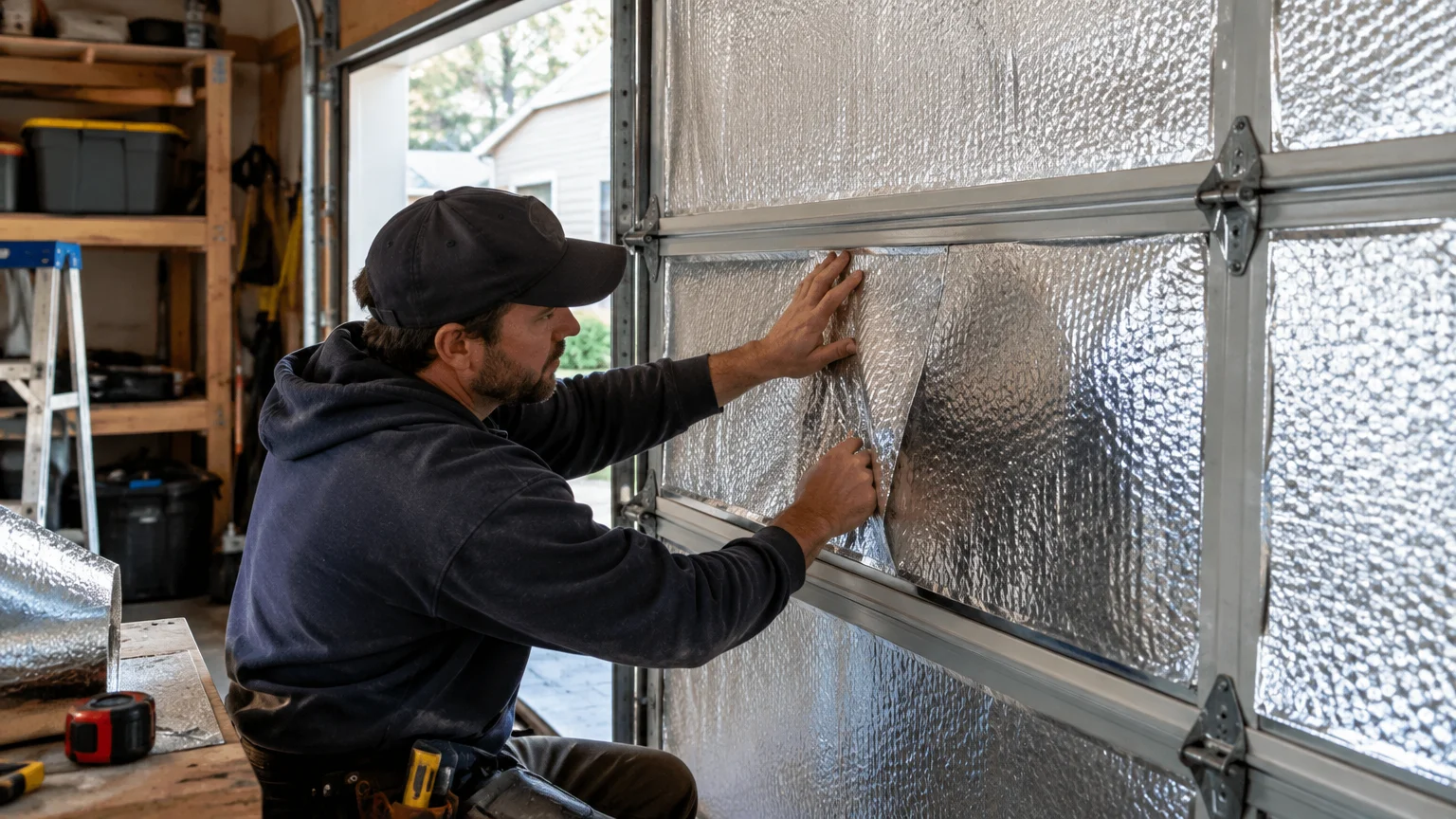
- What does insulating a garage door actually change?
- How do you choose the right insulation for an existing garage door?
- How do you insulate a garage door safely?
- Should you replace the bottom seal before insulating the door?
- What are the benefits and drawbacks of insulating a garage door?
- How can you tell whether an insulated garage door is working properly?
- When should you hire a garage door professional for insulation work?
- Frequently Asked Questions
What does insulating a garage door actually change?
Insulation adds a layer that slows heat from moving through the door. This can make a garage feel cooler in summer and warmer in winter. The result depends on the door material, insulation type, weather in Radford, and the condition of the door seals.
How insulation affects temperature, noise, and door strength
A well-fitted layer can help the garage keep a steadier temperature. It may also soften road noise, rain noise, and sounds from inside the garage. Some kits make thin panels feel firmer, but insulation does not turn a light door into the best garage door for heavy use.
R-value is a term that shows how well a material slows heat flow. A higher R-value may help, but a good fit matters just as much. Gaps, crushed material, and open edges can lower the real benefit. Insulation works best when the side, top, and bottom seals close tightly.
What insulation cannot fix in an older garage
Insulation will not stop water that enters through a damaged threshold. It will not repair a bent track, loose hinge, uneven door, or worn roller. It also cannot make a broken opener safe to use.
Radford Garage Door Repair helps Radford property owners tell comfort work apart from repair work. That check matters because extra material can make a faulty door harder and less safe to operate. Good garage door safety starts with finding the real problem.
How do you choose the right insulation for an existing garage door?
The right choice depends on the door design, panel depth, local weather, and room around the hinges. A sectional door with open panel spaces gives more options than a thin, single-layer door. The material must fit firmly without touching moving parts.
Comparing foam board, reflective panels, and fiberglass kits
Foam board is light and can fit many sectional doors. It gives a clean, firm layer when cut and supported correctly. Reflective panels are thin and can suit tight spaces, but they need an air gap to work well.
Fiberglass kits can fill wider spaces, but they need careful handling. Loose fibers may bother the skin, eyes, and lungs. Any kit should have clear fitting directions. It must stay away from hinges, rollers, cables, and tracks.
How door construction and available panel space affect the choice
First, check whether the door has steel panels, wood panels, windows, or a mix. Measure panel spaces only when the door is safely closed and still. The material should not press against hinges or make the panels bend outward.
Avoid adding heavy layers without checking the door balance. Springs carry the door’s weight. Extra weight can change how the door moves and strain the opener. A light kit made for garage doors is usually safer than loose, homemade layers.
How do you insulate a garage door safely?
A homeowner does not always need a professional for light insulation work. They can inspect the door, clean the panels, and fit a light kit when the door is stable and all work stays away from springs, cables, brackets, and tracks. The door should stay closed during preparation.
Anyone who sees damage, sudden movement, or a door that feels very heavy should stop. A homeowner should never adjust a garage door spring, cable, bottom bracket, or counterbalance part. These parts can hold dangerous force and need the right tools and training.
Tools and preparation for an installed sectional door
Safe preparation may include a tape measure, pencil, straight edge, utility knife, gloves, and eye protection. Keep the work area clear. Do not force the door, lift it by hand, or disconnect the opener just to make the work easier.
A homeowner can wipe dust from the panel surfaces and look for loose fasteners. They can also read the kit directions before cutting. No material should cover warning labels, block drainage points, or hold water against the door.
How to fit insulation without interfering with hinges or tracks
Place light material inside the panel space while keeping moving parts clear. The insulation should sit flat and stay secure while the door moves. It should not rub the track, press against a hinge, or cover a roller path.
Do not adjust springs, lift cables, bottom brackets, or counterbalance parts. If the job requires work near these parts, stop and call a trained garage door professional. Safe upkeep includes cleaning and visual checks, not hazardous repairs.
Should you replace the bottom seal before insulating the door?
Yes. A damaged bottom seal should be fixed before you judge the value of insulation. The bottom seal closes the gap between the door and floor. If it is cracked, flat, or missing, air and water can enter around the new insulation.
How gaps at the floor, sides, and top waste insulation benefits
A garage door can have good panel insulation and still feel drafty. Air may enter under the door, around the side frames, or across the top. Perimeter weatherstripping helps close these edges and keeps large air leaks from reducing the insulation benefit.
The floor matters too. Concrete may be uneven, leaving small gaps below the door. A garage door threshold can help close that gap when fitted to a clean, sound surface. It should not hide a drainage issue or hold water against the door.
When to use a bottom seal, threshold, or perimeter weatherstripping
A bottom seal fits into the retainer along the lower edge of many sectional doors. A threshold sits on the floor under the closed door. Side and top weatherstripping fits around the frame. Each part closes a different gap, so one product may not replace the others.
Radford Garage Door Repair serves property owners who need help telling insulation work from weatherstripping or garage door repair. A careful inspection can help prevent the wrong seal from being fitted to a damaged frame.
What are the benefits and drawbacks of insulating a garage door?
Insulation can improve comfort, reduce drafts, and help protect items stored in the garage. It may also reduce outside noise and make a thin door feel less flimsy. The benefit is strongest when the door closes evenly and the surrounding seals work well.
When insulation can improve comfort and protect stored belongings
A steadier garage temperature may help protect paint, tools, paper goods, and other items from large temperature swings. It can also make the room more pleasant for short jobs. Insulation may help a room above the garage feel quieter.
These gains are not automatic. A poorly sealed wall, roof, window, or service door may still let in outside air. Garage door insulation is one part of a wider plan. It cannot replace sound building care or repair.
How added weight can affect springs, balance, and opener operation
Extra weight can change the balance of a sectional door. A balanced door should move smoothly and stay in place during a trained check. If it becomes heavy, drops quickly, strains the opener, or reverses, it needs attention.
Never correct extra weight by adjusting a spring or cable. Torsion and extension springs hold stored energy. A wrong adjustment can cause serious injury or damage. The safer choice is to have the full door checked before normal use continues.
How can you tell whether an insulated garage door is working properly?
A homeowner can check for even panel fit, fewer drafts, and smooth movement without touching dangerous hardware. The door should open and close without scraping, shaking, or stopping for no clear reason. New noise or movement means the project needs review.
Simple checks for drafts, panel fit, balance, and operating noise
With the door closed, look for daylight around the sides and top. Check whether the bottom seal touches the floor across its full width. The panels should stay aligned, and the insulation should not bulge into hinges or tracks.
Listen during normal opener use. Grinding, loud popping, repeated clicking, or rubbing can point to a repair need. A homeowner can clean dust from the photo-eye lenses and check that nothing blocks them. Do not change spring or cable settings.
Signs the door needs adjustment or garage door repair
Stop using the door if it falls, binds, comes off its track, or shows a loose cable. The same applies when a spring is broken, a panel is bent, or the opener pulls without moving the door. These are repair problems, not insulation problems.
Garage Door Off Track Repair, Garage Door Opener Repair, and Garage Door Cable Repair address different faults. Choosing the right service starts with the symptom. A professional can inspect the system before insulation adds weight or hides a damaged panel.
When should you hire a garage door professional for insulation work?
Professional help is needed when insulation work involves springs, cables, bottom brackets, damaged panels, or an unbalanced door. It is also wise when the door has an unknown history or added material may change its weight. Safe DIY work should stay limited to light fitting, cleaning, and visual checks.
Situations involving broken springs, damaged panels, or an unbalanced door
A broken spring may leave the door very heavy. A damaged panel may change the door’s path. A loose cable can move suddenly. These faults can hurt someone if a homeowner tries to lift, release, tighten, or reset the hardware.
A professional can check the counterbalance system, hinges, rollers, tracks, opener, and seals as one system. This matters because a door may seem to have an insulation issue when the real problem is poor balance or worn hardware.
How to plan insulation alongside weatherstripping and maintenance
The best plan starts with a condition check. Repair unsafe parts first. Then address the bottom seal, threshold, side and top weatherstripping, panel fit, and insulation. This order helps the homeowner judge each improvement clearly.
Radford Garage Door Repair can help homeowners and business owners across the main Radford area, from East Radford and New Town to Christiansburg, Dublin, Pulaski, Pembroke, and nearby communities. Use the Contact us page for service questions when a door is unsafe, stuck, off track, or affected by a broken spring or cable.
Frequently Asked Questions
Can a homeowner insulate an existing garage door?
Yes, a homeowner can often fit a light insulation kit to a stable sectional door. The work should avoid springs, cables, bottom brackets, hinges, and tracks. If the door is heavy, damaged, unbalanced, or hard to move, stop and arrange professional help.
Does garage door insulation stop drafts?
Insulation alone does not stop most drafts. Air can still enter below the door or around the frame. A working bottom seal, garage door threshold, and side and top weatherstripping often matter more for air control. The door must also close evenly against those seals.
How can someone insulate garage door panels without damaging them?
Use a light material made for garage doors and keep it inside the panel space. It should not touch hinges, rollers, tracks, or cables. Do not force a thick layer into a narrow cavity. If the panels bend or the door becomes heavy, stop using it and seek help.
Can insulation damage a garage door opener?
It can add weight that changes how the door moves. The opener may strain, stop, reverse, or make new sounds. A homeowner should not change spring tension or opener force settings to correct this. A professional should check balance and operation first.
Who repairs garage doors near me when insulation reveals a fault?
A local garage door professional can inspect the full system and find the needed service. This may include Garage Door Opener Repair, Garage Door Off Track Repair, or Garage Door Cable Repair. Stop using the door when it falls, binds, or shows damaged hardware.
Key Takeaways
- Insulation can improve comfort, reduce noise, and help protect stored items.
- Bottom, side, and top seals are just as important for draft control.
- Added weight can change door balance and opener performance.
- Homeowners should not adjust springs, cables, or bottom brackets.
- Repair unsafe hardware before adding insulation.
Insulating an existing garage door can be a useful project when the door is sound and well sealed. It cannot replace garage door repair for broken springs, damaged panels, loose cables, or opener faults. Careful checks help protect the building and everyone who uses it.
If the door is heavy, stuck, noisy, or unsafe, do not add insulation first. Contact us today through Radford Garage Door Repair for help deciding what needs attention.